Changes in informal society and slavery during the Chosun-Era in Korea
humanities and social sciences communications
19 October 2022
Heeho Kim
3回目のメモであり、論文で使うための内容にする
著者は1名だけの論文であり、Kyungpook National University=慶北大学(韓国、慶尚道、大邱広域市)の教授。朝鮮史そものではなく、経済学が専門。
万一、この者が本当に彦陽(Eonyang)、丹城(Danseong)、大邱(Daegu)の総人口と奴婢人口を調べたのであれば、極めて貴重な論文となるものの、内容にあまりにも疑問が多すぎる。
以前は、どうせいつもの韓国人どもの嘘であると決めつけ、無視していたが、かすかに、本物かもしれないという感じである。好意的に解釈すれば、数値も漢字で書かれているので漢字で書かれたデータを読み誤ったことになる。
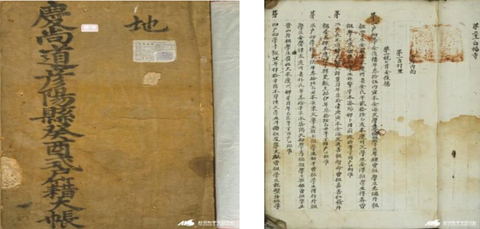
Official register record of household tallies in Eonyang county of Kyungsang province in 1777–1861.
慶尚道彦陽県の戸籍大帳画像が最初に示されている
Table 1 Number of slaves and ratio of slave desertion in the Daegu-Choi family in 1672–1801* (unit; person, %).
Daegu-Choi familyは、直訳すれば、大邱ー崔 家となる。しかし、疑問が極めて強い。大邱府に所在していた慶州崔氏のうちのある両班家に残された記録を発見したと解するしかない。
慶州崔氏ならあり得る。画像は朝鮮総督府資料から慶州郡を本貫とする朝鮮に散らばった一覧
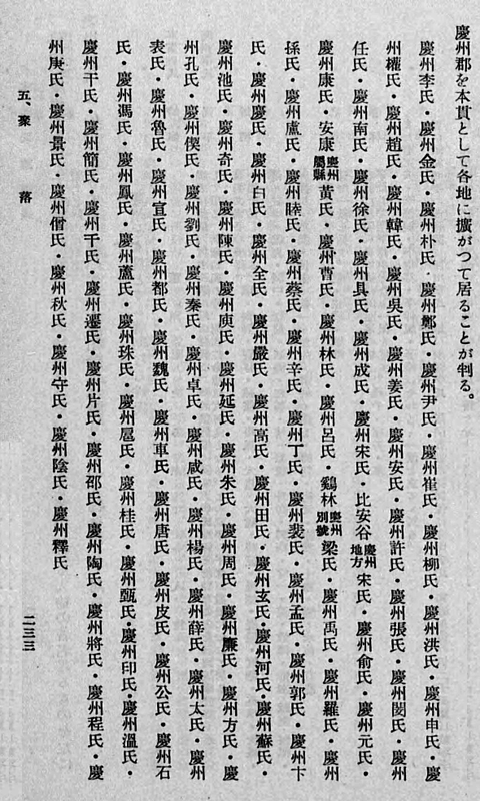
もしも、万一本物であれば申告ベースの戸籍大帳に基づかない奴隷数の長期推移を示す極めて貴重なデータ
下表はtable1から奴隷数・逃亡数・逃亡比率だけを取り出したもの。
Table 1 presents the change in the slave population from an official household tally of the Daegu-Choi family that lived in Daegu county in the Kyungsang province from 1672 to 1801.
Table 2 Ratio of slave desertion in Danseong county of the Kyungsang province in the eighteenth and nineteenth centuries* (unit; persons, %).
*Data sources:
Author’s data from official household tally registers held by the central government on the slave populations of Kyungsang province (Eonyang, Danseong, and Daegu).
The author obtained data on Eonyang, Danseong, and the Daegu-Choi family from the official household tally register, whereas data for Daegu county referred to Shikata (1938).
Data on the total population was extracted from Kwon and Shin (1977). Bold values stress the number of the deserted slaves or the ratio of desertion.
Eonyang, Danseong, and Daeguは、彦陽(Eonyang)、丹城(Danseong)、大邱(Daegu)であり、これら3つの邑の合計数値
彦陽(Eonyang)、丹城(Danseong)は著者データ、大邱(Daegu)は四方データ
しかし、①大邱府だけで、四方デーでは人口は、1.2万~1.5万に達する。②丹城県は山内民博が調べており、戸数は1681年で戸数は312戸=多くても1500人。③彦陽郡は不明
四方データの人口は次のとおり
表4身分別人口数とその比率
赤字にしたのは、下記からであるが、入手できない
Kwon T, Shin Y (1977) Estimates of population in the Chosun Korea. Donga Cult 14(1):67–95. Korean
Table 3
Ratio of slave desertions in Eonyang county of the Kyungsang province, 1777–1861* (numbers in parentheses are percentages).
*Data source: Author’s data from the official household registry of Eonyang county of Kyungsang province. Bold values stress the number of the deserted slaves or the ratio of desertion.
Eonyang county of the Kyungsang provinceは慶尚道彦陽県。県にしては人口が多いが、朝鮮総督府は郡に昇格させているので不思議ではない、が、しかし、人口の変動が短期間であまりにも激しすぎる。万一、本当の総人口データであれば、1795年の3年後に人口は2倍となり、その15年後に人口が半減している。著者のオツムはおかしい?か、又は、戸籍大帳を作成した者がおかしいか?である。
承政院日記と朝鮮王朝実録を少し調べたが、彦陽県について人口が短期間で大きく変動する特殊要因は無いように感じる。
humanities and social sciences communicationsは査読のある人文学・社会科学・行動科学の全領域をカバーする学術誌だそうである。通常ならば、付属資料ではなく本文掲載表のため必ず査読者が指摘するはずである。いつものようにグーグルのバカは次のように答えてくる。
評価基準:
Nature本誌とは異なり、「研究のインパクトや重要性の大きさ」ではなく、「研究問いの明確さ」「手法や分析の強固さ(正しさ)」といった学術的な堅実さ(Soundness)を重視して採否を判断する独立した基準を持っています。
人文学・社会科学分野における最高峰のオープンアクセスジャーナルのひとつであり、厳格な審査を経て、SSCI(社会科学引用文献インデックス)やAHCI(アーツ&ヒューマニティーズ引用文献インデックス)などの主要なデータベースにもインデックスされています。
Table 4
Slave prices and real slave prices in the Chosun era Korea* (unit; nyang of a coin money, suk of rice).
Table 5
Descriptive Statistics about slave prices, real slave prices, slave population, slave desertion rates and rice prices in eighteenth and nineteenth-century Korea*.
*Observation numbers for rice prices, slave prices, and real slave prices are 139, 119, and 103 due to missing observations. **Rice prices are the weighted rice prices in the Kyungsang and Cheonla provinces. Suk is a unit of rice (=80 kg). ***Data on slave desertion rates and slave population are from the Daegu-Choi family for securing consistent series.
Table 6
Robust GLS and 2SLS estimation results in the relationship between slave desertion and real slave prices in Eq. (1)**.
奴隷価格・逃亡と価格の関連については、表を省略。
参照文献リストから、著者は自分で調べてはいないという前提で表1~3の元になった可能性がある論文を抽出
Choi S (1997) A study on interest rates from old records in the late Chosun dynasty. Korean Cult 19:89–128. Korean
Choi B (1978) A study on slaves in the earlier Chosun dynasty. Jeonpook Hist 2:109–152. Korean
Choi J (1974) A pattern of family in the early Chosun Korea. Jindan Hakbo 37:24–51. Korean
Chong S (1983) A study in society changes in the late Chosun dynasty. Iljogak, Seoul
Han Y (1978) A pattern on marriage of slaves in Ulsan, 1609. J Hist 77:105–125. Korean
Hawthorne W (1999) The production of slaves where there was no state: the Guinea-Bissau Region, 1450–1815. Slavery Abolit 20:97–124
Hong, S (1981) A Study on Slavery in the Korea Dynasty. Korea Research Institute, Korean
Jeon H (1989) A study on status of slaves in the Chosun dynasty. Iljokak Pub., Seoul, Korean
Jeon H (1998) Pattern of slavery in the Chosun dynasty. Edited by Korea History Association in Nobi, Selfdom, Slavery-Comparison of History, Ilchokak, Seoul, Korean. pp. 277–303
Ji S (1995) Status of slaves in the Chosun dynasty. Iljokak Pub, Seoul
Kim H, Lee J (2007) Slavery and land ownership in the Chosun dynasty. Kyungpook National University Press, Daegu, Korean
Kwon T, Shin Y (1977) Estimates of population in the Chosun Korea. Donga Cult 14(1):67–95. Korean
Lee Y (1998) Slavery in Korea. Ch. 7, edited by Korea History Association, in Nobi, Selfdom, Slavery-Comparison of History. Iljogak, Seoul, Korean. pp. 304–422
Lee S (1981) Edited. Old records in Kyungpook province, Yeongnam University, Korean
Park Y (1986) A study on ruling class in the Chosun dynasty, Ph.D. Dissertation, Kyungpook National University Press, Daegu, Korean
Pyung M (1982). A study on slavery in the Chosun dynasty. Jisiksanup Pub., Seoul, Korean
Shikata H (1938) A study on population and classes in the Chosun Korea: a review of law. Kyungseong Imperial University, Seoul, Japanese
humanities and social sciences communications
19 October 2022
Heeho Kim
3回目のメモであり、論文で使うための内容にする
著者は1名だけの論文であり、Kyungpook National University=慶北大学(韓国、慶尚道、大邱広域市)の教授。朝鮮史そものではなく、経済学が専門。
万一、この者が本当に彦陽(Eonyang)、丹城(Danseong)、大邱(Daegu)の総人口と奴婢人口を調べたのであれば、極めて貴重な論文となるものの、内容にあまりにも疑問が多すぎる。
以前は、どうせいつもの韓国人どもの嘘であると決めつけ、無視していたが、かすかに、本物かもしれないという感じである。好意的に解釈すれば、数値も漢字で書かれているので漢字で書かれたデータを読み誤ったことになる。
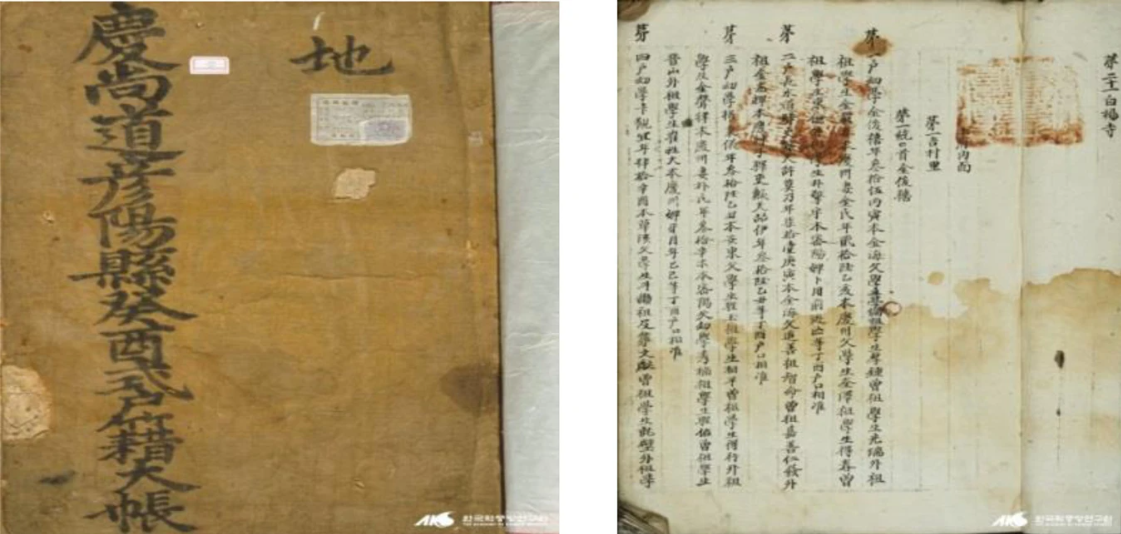
Official register record of household tallies in Eonyang county of Kyungsang province in 1777–1861.
慶尚道彦陽県の戸籍大帳画像が最初に示されている
Table 1 Number of slaves and ratio of slave desertion in the Daegu-Choi family in 1672–1801* (unit; person, %).
Daegu-Choi familyは、直訳すれば、大邱ー崔 家となる。しかし、疑問が極めて強い。大邱府に所在していた慶州崔氏のうちのある両班家に残された記録を発見したと解するしかない。
慶州崔氏ならあり得る。画像は朝鮮総督府資料から慶州郡を本貫とする朝鮮に散らばった一覧
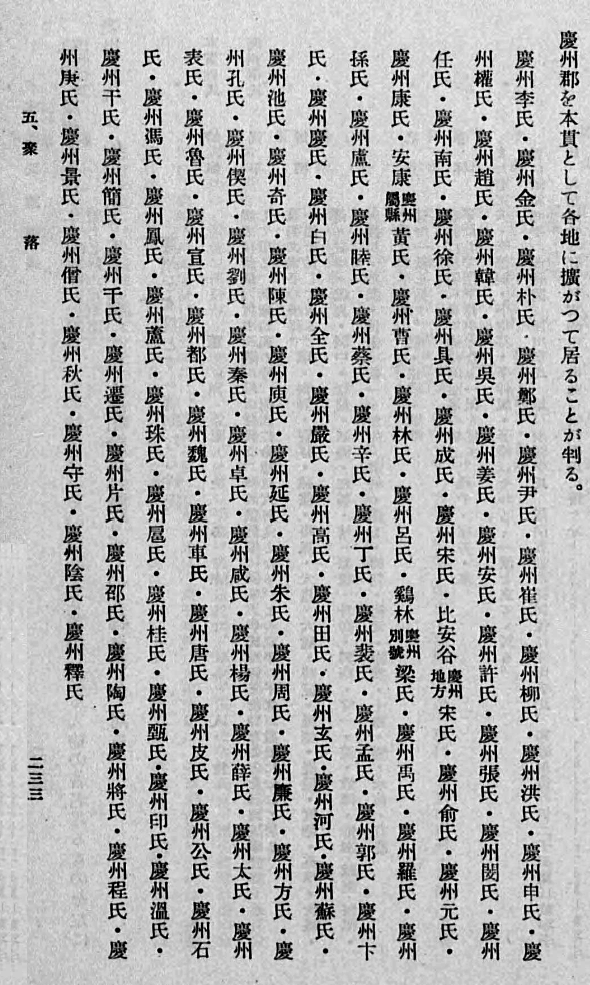
もしも、万一本物であれば申告ベースの戸籍大帳に基づかない奴隷数の長期推移を示す極めて貴重なデータ
下表はtable1から奴隷数・逃亡数・逃亡比率だけを取り出したもの。
Table 1 presents the change in the slave population from an official household tally of the Daegu-Choi family that lived in Daegu county in the Kyungsang province from 1672 to 1801.
| Year of register** | Deserted | Numbers of total slaves (male/female) | Ratio of slave desertion (%) |
| 1672 | 14 | 73(40/33) | 19.2 |
| 1681 | 11 | 88(52/36) | 12.5 |
| 1684 semi | 17 | 77(46/31) | 22.0 |
| 1684 | 11 | 86(49/37) | 12.8 |
| 1687 | 16 | 73(45/28) | 21.9 |
| 1690 | 6 | 64(38/26) | 9.3 |
| 1690 dan | 6 | 58(37/21) | 10.3 |
| 1693 | 14 | 74(39/35) | 18.9 |
| 1696 semi | 14 | 82(36/46) | 17.1 |
| 1696 dan | 4 | 59(27?/32) | 6.8 |
| 1696 | 2 | 55(28/27) | 3.6 |
| 1705 | 23 | 158(80/78) | 14.5 |
| 1708 | 23 | 148(73/75) | 15.5 |
| 1714 | 155(77/78) | ||
| 1717 | 2 | 70(41/29) | 2.9 |
| 1720 | 5(3/2) | ||
| 1723 | 8 | 94(52/42) | 8.5 |
| 1729 | 22 | 157(80/77) | 14.0 |
| 1735 | 23 | 164(84/80) | 14.0 |
| 1735 semi | 29 | 142(76/66) | 20.4 |
| 1738 | 17 | 149(77/72) | 11.4 |
| 1738 semi | 23 | 152(78/74) | 15.1 |
| 1741 | 16 | 145(77/68) | 11.0 |
| 1744 | 23 | 153(79/74) | 15.0 |
| 1747 | 15 | 159(81/78) | 9.4 |
| 1750 semi | 24 | 132(66/66) | 18.2 |
| 1750 dan | 25 | 135(67/68) | 18.5 |
| 1753 | 23 | 137(69/68) | 16.8 |
| 1753 dan | 23 | 138(69/69) | 16.7 |
| 1759 | 27 | 132(62/70) | 20.4 |
| 1762 | 36 | 134(59/75) | 26.7 |
| 1768 | 33 | 144(68/76) | 22.9 |
| 1774 | 29 | 133(58/75) | 21.8 |
| 1777 | 28 | 129(60/69) | 21.7 |
| 1786 | 27 | 94(38/56) | 28.7 |
| 1789 | 20 | 93(38/55) | 21.5 |
| 1789 semi | 20 | 84(35/49) | 23.8 |
| 1792 | 10 | 77(33/44) | 12.9 |
| 1792 semi | 75(33/42) | ||
| 1795 | 21 | 72(31/41) | 29.1 |
| 1798 | 35 | 69(29/40) | 50.7 |
| 1801 | 41 | 73(32/41) | 56.1 |
| Total (Average) | 702 | 4418 | (20.8) |
- *Source: Official register records of a representative family, Daegu-Choi, in the seventeenth–eighteenth centuries.
- **Semi represents a semi-register record of household tallies; dan implies Register Danja of household tallies; they were temporarily prepared to submit official register records. The heads of the household for the Daegu-Choi family were Kyunham Choi (71 years old in 1690) from 1672 to 1696, Suhak Choi (57 years old in 1708) from 1696 to 1708, Jeongsuk Choi (56 years old in 1735) from 1714 to 1735, Hongwon Choi (82 years old in 1786) from 1735 to 1786, Hong Choi (28 years old) in 1789, Suk Choi (40 years old in 1801) from 1792 to 1801.
- Bold values stress the number of the deserted slaves or the ratio of desertion.
Table 2 Ratio of slave desertion in Danseong county of the Kyungsang province in the eighteenth and nineteenth centuries* (unit; persons, %).
| Year of register | Total slaves | Total population |
| 1678 | 5102 | 8251 |
| 1717 | 5874 | 11999 |
| 1720 | 5690 | 12042 |
| 1729 | 6233 | 13386 |
| 1732 | 5832 | 13124 |
| 1735 | 3732 | 8547 |
| 1759 | 4040 | 11331 |
| 1762 | 3826 | 11585 |
| 1780 | 3418 | 13342 |
| 1783 | 3337 | 13565 |
| 1786 | 3247 | 13403 |
| 1789 | 2832 | 11792 |
| 1825 | 2145 | 11000 |
| 1861 | 2408 | 9795 |
*Data sources:
Author’s data from official household tally registers held by the central government on the slave populations of Kyungsang province (Eonyang, Danseong, and Daegu).
The author obtained data on Eonyang, Danseong, and the Daegu-Choi family from the official household tally register, whereas data for Daegu county referred to Shikata (1938).
Data on the total population was extracted from Kwon and Shin (1977). Bold values stress the number of the deserted slaves or the ratio of desertion.
Eonyang, Danseong, and Daeguは、彦陽(Eonyang)、丹城(Danseong)、大邱(Daegu)であり、これら3つの邑の合計数値
彦陽(Eonyang)、丹城(Danseong)は著者データ、大邱(Daegu)は四方データ
しかし、①大邱府だけで、四方デーでは人口は、1.2万~1.5万に達する。②丹城県は山内民博が調べており、戸数は1681年で戸数は312戸=多くても1500人。③彦陽郡は不明
四方データの人口は次のとおり
表4身分別人口数とその比率
| 両班 | 良人 | 奴婢 | 総数 | |
| Ⅰ期1690年 | 1027人 7.4% | 6894 49.5% | 5992 43.1% | 13913 100 |
| ⅱ期1729年 | 2260 14.8% | 8066 52.8% | 4940 32.4% | 15266 100 |
| Ⅲ期1783年 | 3928 31.9% | 6415 52.2% | 1957 15.9% | 12300 100 |
| Ⅳ期1858年 | 6410 48.6% | 2659 20.1% | 4126 31.3% | 13915 100 |
赤字にしたのは、下記からであるが、入手できない
Kwon T, Shin Y (1977) Estimates of population in the Chosun Korea. Donga Cult 14(1):67–95. Korean
Table 3
Ratio of slave desertions in Eonyang county of the Kyungsang province, 1777–1861* (numbers in parentheses are percentages).
| Year | Total slaves | Total population |
| 1777 | 2110 | 8802 |
| 1795 | 836 | 4904 |
| 1798 | 539 | 10200 |
| 1813 | 845 | 5515 |
| 1825 | 397 | 2547 |
| 1858 | 755 | 3680 |
| 1861 | 1359 | 4667 |
| Average |
*Data source: Author’s data from the official household registry of Eonyang county of Kyungsang province. Bold values stress the number of the deserted slaves or the ratio of desertion.
Eonyang county of the Kyungsang provinceは慶尚道彦陽県。県にしては人口が多いが、朝鮮総督府は郡に昇格させているので不思議ではない、が、しかし、人口の変動が短期間であまりにも激しすぎる。万一、本当の総人口データであれば、1795年の3年後に人口は2倍となり、その15年後に人口が半減している。著者のオツムはおかしい?か、又は、戸籍大帳を作成した者がおかしいか?である。
承政院日記と朝鮮王朝実録を少し調べたが、彦陽県について人口が短期間で大きく変動する特殊要因は無いように感じる。
humanities and social sciences communicationsは査読のある人文学・社会科学・行動科学の全領域をカバーする学術誌だそうである。通常ならば、付属資料ではなく本文掲載表のため必ず査読者が指摘するはずである。いつものようにグーグルのバカは次のように答えてくる。
評価基準:
Nature本誌とは異なり、「研究のインパクトや重要性の大きさ」ではなく、「研究問いの明確さ」「手法や分析の強固さ(正しさ)」といった学術的な堅実さ(Soundness)を重視して採否を判断する独立した基準を持っています。
人文学・社会科学分野における最高峰のオープンアクセスジャーナルのひとつであり、厳格な審査を経て、SSCI(社会科学引用文献インデックス)やAHCI(アーツ&ヒューマニティーズ引用文献インデックス)などの主要なデータベースにもインデックスされています。
Table 4
Slave prices and real slave prices in the Chosun era Korea* (unit; nyang of a coin money, suk of rice).
- *Data source: quoted from Kim and Lee (2007).
- **Nominal and real slave prices are in the monetary unit nyang, a copper coin in Korea, and in units of rice (1 suk = 80 kg = 4.963 bushels).
Table 5
Descriptive Statistics about slave prices, real slave prices, slave population, slave desertion rates and rice prices in eighteenth and nineteenth-century Korea*.
*Observation numbers for rice prices, slave prices, and real slave prices are 139, 119, and 103 due to missing observations. **Rice prices are the weighted rice prices in the Kyungsang and Cheonla provinces. Suk is a unit of rice (=80 kg). ***Data on slave desertion rates and slave population are from the Daegu-Choi family for securing consistent series.
Table 6
Robust GLS and 2SLS estimation results in the relationship between slave desertion and real slave prices in Eq. (1)**.
奴隷価格・逃亡と価格の関連については、表を省略。
参照文献リストから、著者は自分で調べてはいないという前提で表1~3の元になった可能性がある論文を抽出
Choi S (1997) A study on interest rates from old records in the late Chosun dynasty. Korean Cult 19:89–128. Korean
Choi B (1978) A study on slaves in the earlier Chosun dynasty. Jeonpook Hist 2:109–152. Korean
Choi J (1974) A pattern of family in the early Chosun Korea. Jindan Hakbo 37:24–51. Korean
Chong S (1983) A study in society changes in the late Chosun dynasty. Iljogak, Seoul
Han Y (1978) A pattern on marriage of slaves in Ulsan, 1609. J Hist 77:105–125. Korean
Hawthorne W (1999) The production of slaves where there was no state: the Guinea-Bissau Region, 1450–1815. Slavery Abolit 20:97–124
Hong, S (1981) A Study on Slavery in the Korea Dynasty. Korea Research Institute, Korean
Jeon H (1989) A study on status of slaves in the Chosun dynasty. Iljokak Pub., Seoul, Korean
Jeon H (1998) Pattern of slavery in the Chosun dynasty. Edited by Korea History Association in Nobi, Selfdom, Slavery-Comparison of History, Ilchokak, Seoul, Korean. pp. 277–303
Ji S (1995) Status of slaves in the Chosun dynasty. Iljokak Pub, Seoul
Kim H, Lee J (2007) Slavery and land ownership in the Chosun dynasty. Kyungpook National University Press, Daegu, Korean
Kwon T, Shin Y (1977) Estimates of population in the Chosun Korea. Donga Cult 14(1):67–95. Korean
Lee Y (1998) Slavery in Korea. Ch. 7, edited by Korea History Association, in Nobi, Selfdom, Slavery-Comparison of History. Iljogak, Seoul, Korean. pp. 304–422
Lee S (1981) Edited. Old records in Kyungpook province, Yeongnam University, Korean
Park Y (1986) A study on ruling class in the Chosun dynasty, Ph.D. Dissertation, Kyungpook National University Press, Daegu, Korean
Pyung M (1982). A study on slavery in the Chosun dynasty. Jisiksanup Pub., Seoul, Korean
Shikata H (1938) A study on population and classes in the Chosun Korea: a review of law. Kyungseong Imperial University, Seoul, Japanese

コメント